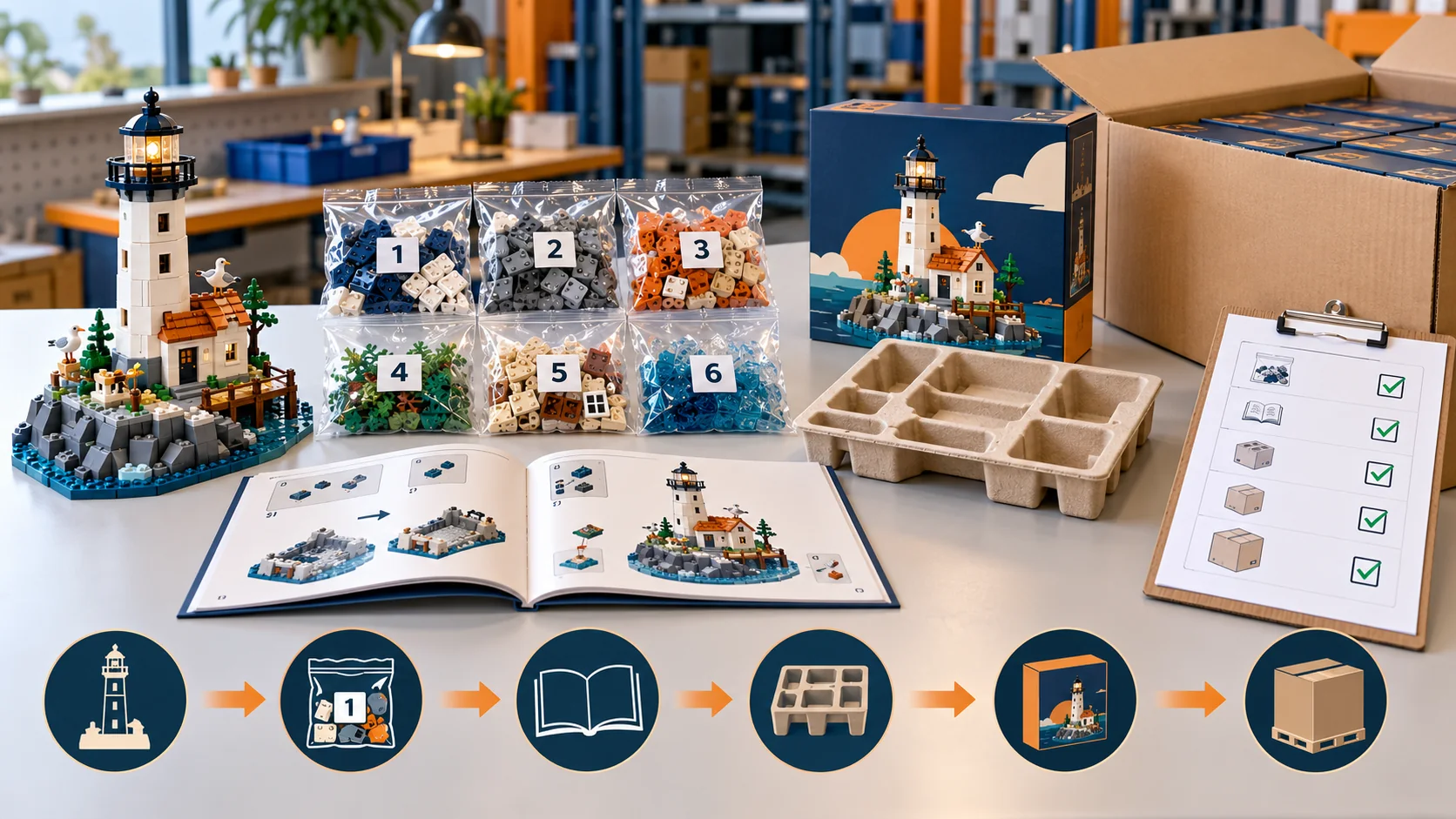
Packaging is part of the building experience. A complete kit needs the correct pieces, a clear bag sequence, tested instructions, sensible spares and a box that survives distribution. Planning these elements after production creates avoidable errors and repacking cost.
Choose a bagging structure that follows the build
For a small model, sorting by color may be enough. Larger models are easier when bags follow assembly stages. Bag numbers should match the instruction book and the packing list, while very similar components may need separate inner bags. Spare pieces should be intentional rather than an uncontrolled substitute for accurate counting.
Packaging layers and their jobs
| Layer | Purpose | Buyer decision |
|---|---|---|
| Parts bags | Keep stages or colors organized. | Sequence, labels and spares |
| Instructions | Guide the build and identify pieces. | Paper, digital or both |
| Insert or tray | Protect components and improve presentation. | Paper, pulp or plastic format |
| Retail box | Communicate value and protect the kit. | Size, artwork and finish |
| Master carton | Protect multiple units in transport. | Quantity, marks and destination |
Instruction design must be tested
A render is not proof that instructions work. Ask a person who did not design the model to complete a test build. Record unclear rotations, hidden connections, confusing colors and steps with too many new pieces. Then update the manual, BOM and bag plan as one controlled revision.
Our integrated kitting advantage
TOSTUDY coordinates parts sourcing, numbered bags, manuals, inserts, retail boxes and final carton packing. The same approved BOM drives both counting and instructions, reducing the risk that different suppliers work from different file versions. Weight checks can support counting, but they should be combined with component controls and final kit audits.
Small-batch projects can begin with a plain or digitally printed packaging format, then move to a more specialized box after demand is proven. MOQ and cost vary by box construction, print process, insert, quantity and destination.
Packaging approval checklist
- Final BOM revision matches the instruction revision.
- Bag numbers and step ranges are consistent.
- Critical small parts have defined spare quantities.
- Instructions have been test-built from sealed bags.
- Required warnings, age grading and company details are present.
- Box dimensions and master-carton quantities are confirmed.
- Transit protection matches the shipping method.
Read about our custom instructions and packaging service or begin with a project quotation.
Frequently asked questions
Can you pack parts in numbered bags?
Yes. The bag plan is developed from the approved assembly sequence and BOM.
Can you provide printed and digital instructions?
Yes. Format, language and file delivery should be agreed during the project specification.
Can we start with simple packaging?
Yes. A small pilot can use a practical box or sleeve before investment in a higher-volume packaging process.
Build a packaging plan around the product
Send your BOM, instructions, target quantity and sales channel for a coordinated kitting review.